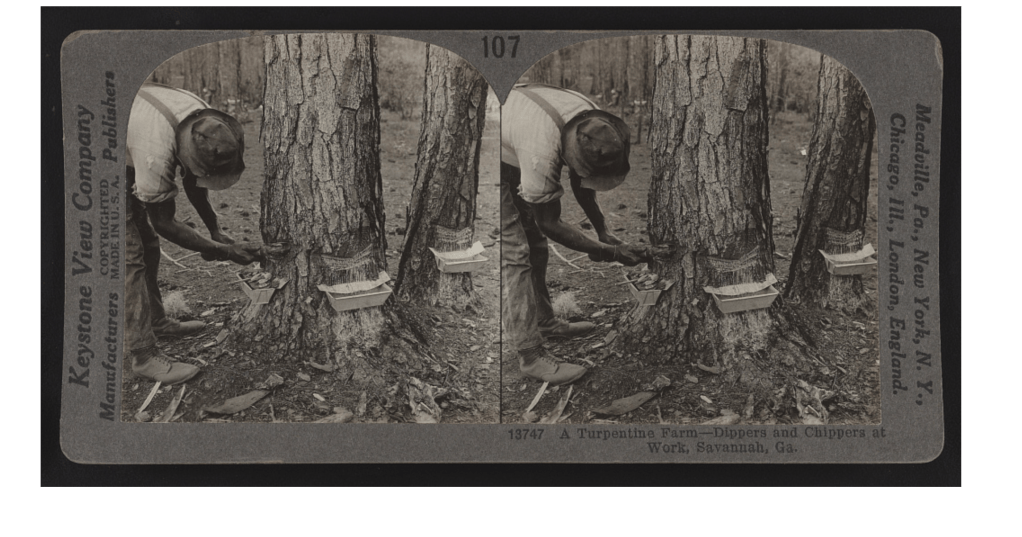
This post is dedicated to the wild, tangled, complicated, and beautiful branches of my family tree on my dad’s side of the family. I will be taking a trip to Mississippi soon to trace that family tree even more.
I want to know more about where they lived. Where they worked. What they survived. Who they loved. And what they carried forward; whether they meant to or not.
Because sometimes family history isn’t found in polished photographs or neatly written stories. Sometimes it’s buried in census records, old letters, forgotten names, turpentine camps, difficult memories, and stories that took generations to finally surface.
In the 1930 U.S. Census, Pearl River County, Mississippi, Beat 5, there on lines 69 -74, are my great-grandpa William Smith, my great-grandma Teona, my great-uncles Silva (my name is Sylvia), Thomas and Joseph and my grandma, my daddy’s mom, Annie Bell.
When you look even closer at those census lines, the deepest heartbreak (to me) isn’t just the work, it’s who wasn’t there. There are very few children listed in these households and some children are listed as “stepchildren.”
The toxic chemical fumes of the boiling resin vats, the contaminated camp water, and the complete lack of medical infrastructure took a devastating toll. Pregnant women and infants faced an incredibly high infant mortality rate, leaving families starkly small. To survive, the community had to rely on a network of mutual care.
In an environment where an industrial accident or disease could kill a parent, widows and widowers married quickly out of sheer economic necessity. Men needed a woman/wife to run the brutal domestic chore of washing resin from clothes, boiling sap cups etc., and women needed a male worker/husband tied to a company paycheck to keep a roof over their heads.
Forgotten History
We all know the story of the cotton fields. Growing up, standard history textbooks taught us about the plantations of the Deep South, the rows of white cotton, and the forced labor that built an empire.
But there is another empire, one hidden deep within the dark, unbroken canopy of the Southern piney-woods, that history chose to forget. “I” would have never known about it, had I not started researching my dad’s side of the family.
Long before I ever stepped foot into the woods, my great-grandpa William and my great-uncles Sylva and Thomas, spent their lives among the trees, not hiking through them for pleasure, but working them to survive.
I look at the photo below and wonder if he’s lost in thought. If he’s resting. I see his shoes, battered and torn. I cannot imagine what that kind of work must’ve done to the body and soul.
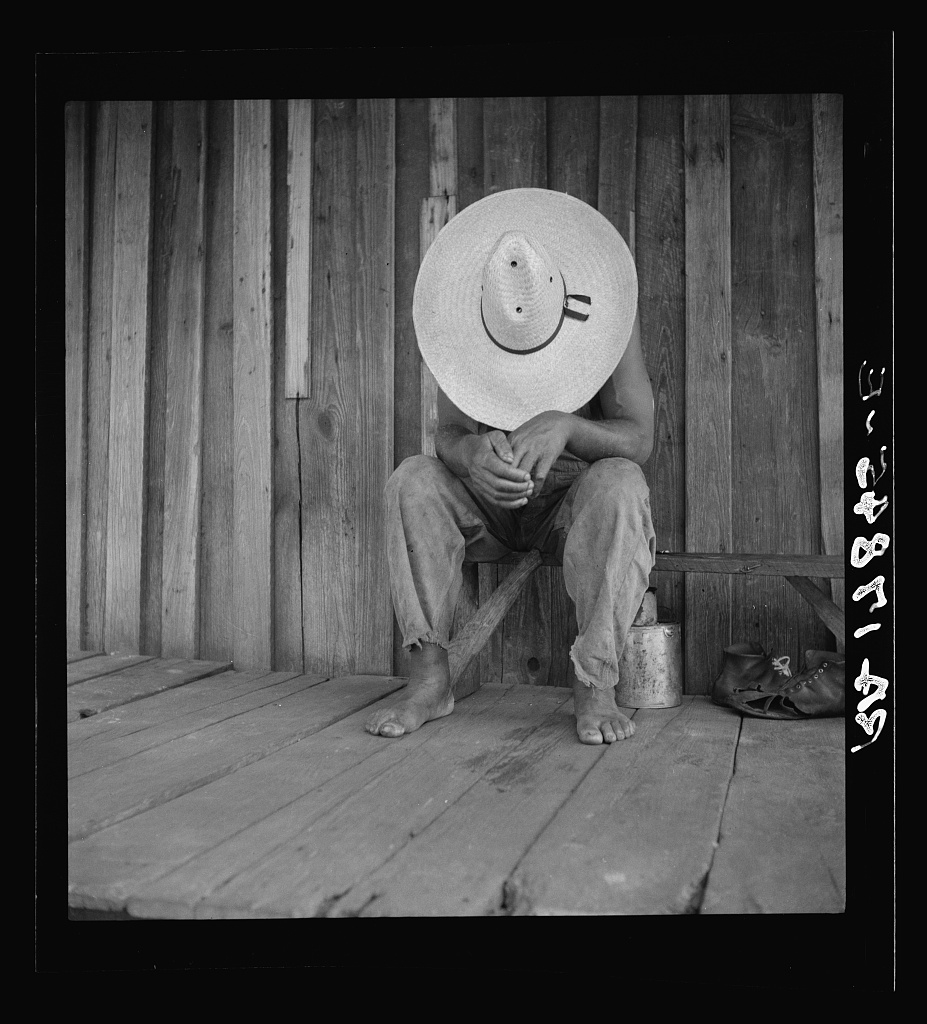
My great-grandpa and great-uncles were turpentine workers. It was some of the most backbreaking labor in the American South. Turpentine workers endured the blistering Mississippi summer heat, swarms of insects, and long, physical hours handling heavy tools in isolated parts of the forest.
Every single morning, they would head into the dense pine forests carrying a “hack”, a heavy, razor-sharp iron tool on a weighted wooden handle. With swift, practiced swings, they would cut precise V-shaped gashes into the bark to make the resin flow. The scarred trunks they left behind were known across the South as “cat-faces.”
The camp they lived in was called Rowlands, Mississippi. It wasn’t a town born out of a community, it was an industrial settlement built along temporary railroad tracks. The camp was named after Lamont Rowlands, a wealthy Northern lumber tycoon who, alongside industrialist L.O. Crosby, built a massive timber empire controlling millions of acres of Mississippi pine. The town didn’t stay in one place, it was nomadic.
The First Wave (1926–1931): The original logging camp was built miles to the north and by 1931, the company had stripped the forest bare. They pulled up the temporary train tracks, abandoned the shacks, and left a ghost town behind.
The Second Wave (1934–1938): In early 1934, the company laid 22 miles of brand-new tracks deeper into the virgin southern piney-woods, opening “camp Rowlands”.
My family was right at the heart of this transition. My great-grandparents, my great-uncles, my grandmother Annie Bell, and my grandfather named C. Woodrow (I can’t make out his first name) were part of the labor crew brought in to build this second wave from the ground up.
It was in the very first months of the second wave, that on July 30, 1934, my dad, J.W., took his first breath.
Economics and History
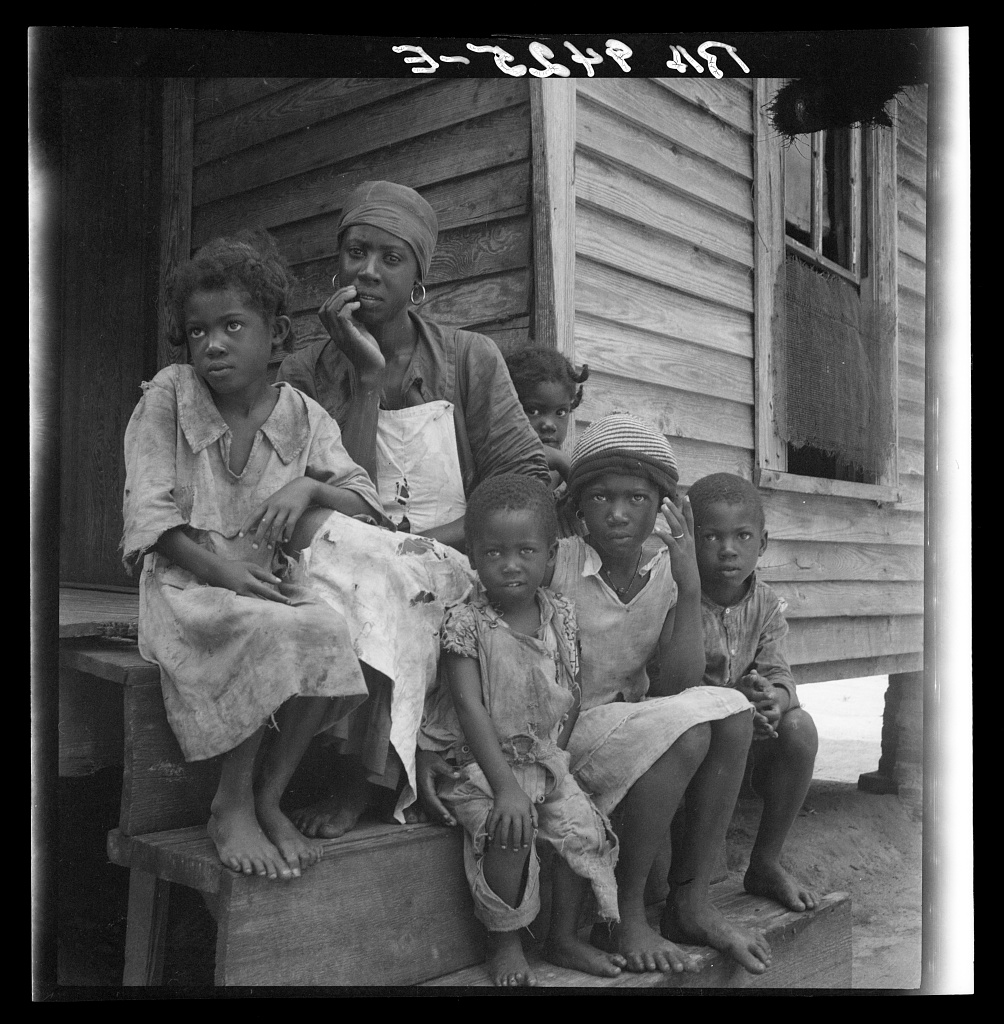
A single dollar for twelve hours of backbreaking labor . Looking at the children huddled on those wooden steps, their clothes are dirty, and badly torn. They are entirely barefoot; an economic necessity to preserve expensive shoes for winters or Sundays. The timber barons didn’t just extract the sap from the trees, they extracted everything they could from the families who lived there too.
And that dollar-a-day wage wasn’t guaranteed, it had to be earned through a brutal system known as “the task.” Just like the cotton fields of the South, turpentine camps enforced strict daily work quotas. Chippers were required to hack fresh V-shaped grooves into thousands of trees a week, while dippers had to fill three to four massive, heavy barrels of sticky raw sap every single day.
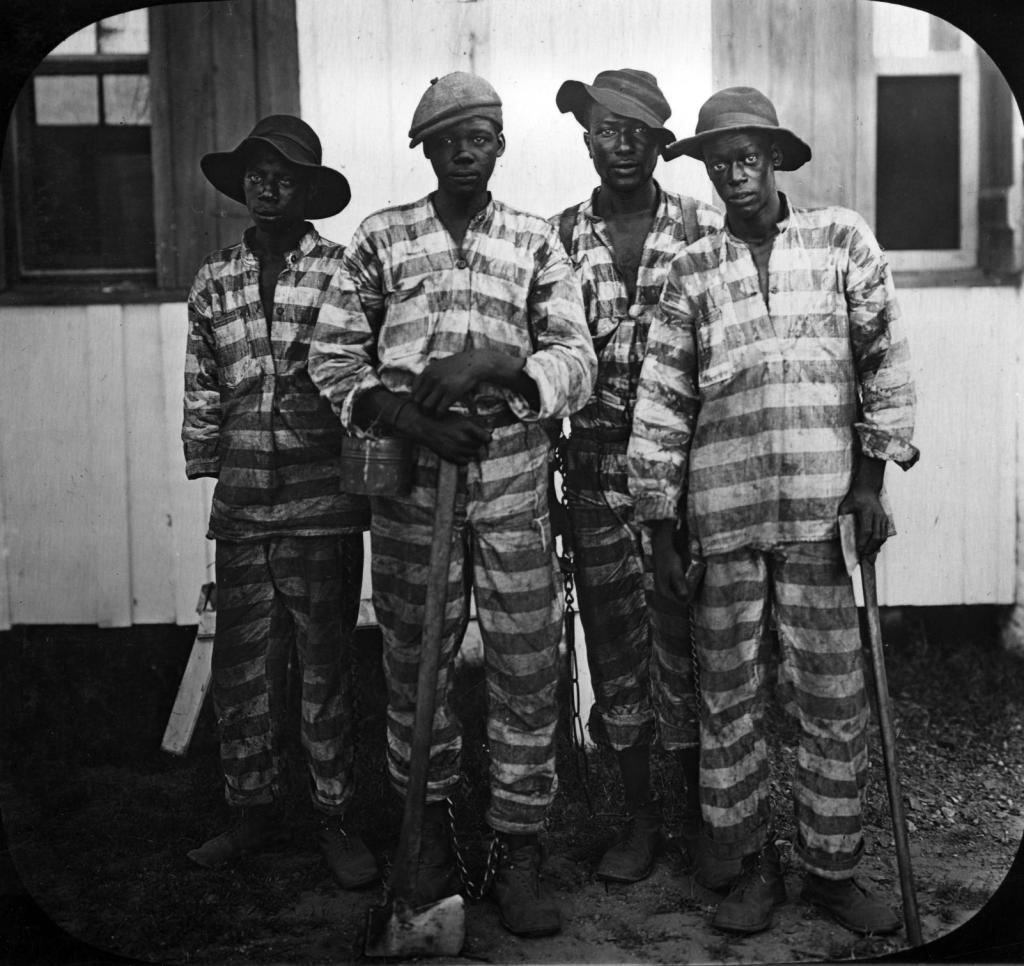
Because these camps were hidden deep within private forests, the company bosses ruled with absolute, unchallenged power. If a worker fell short of “the task,” the consequences were severe. If a laborer tried to flee the debt trap, riders or the local sheriffs would track them down with hound dogs and drag them back to the trees. Overseers on horseback enforced quotas through physical threats or violence, a dark hangover from the region’s convict-leasing era.
Picture below: African-American prisoners caught up in the convict labor system of the state of Florida, which had a notorious reputation for its severe penal labor system. Agreements between correctional institutions and private corporations such as lumber companies and turpentine manufacturers enabled companies to use convict labor to greatly reduce labor costs in a state that already had very low labor costs.
If physical force wasn’t used, economic warfare was. Missing a quota meant the bosses docked their pay, plunging the family deeper into a cycle of commissary debt that legally bound them to the land. It was a system designed as an economic cage. Laborers rarely saw actual U.S. currency. Instead, they were paid in company scrip, private metal tokens or paper coupons that were completely worthless outside the camp.
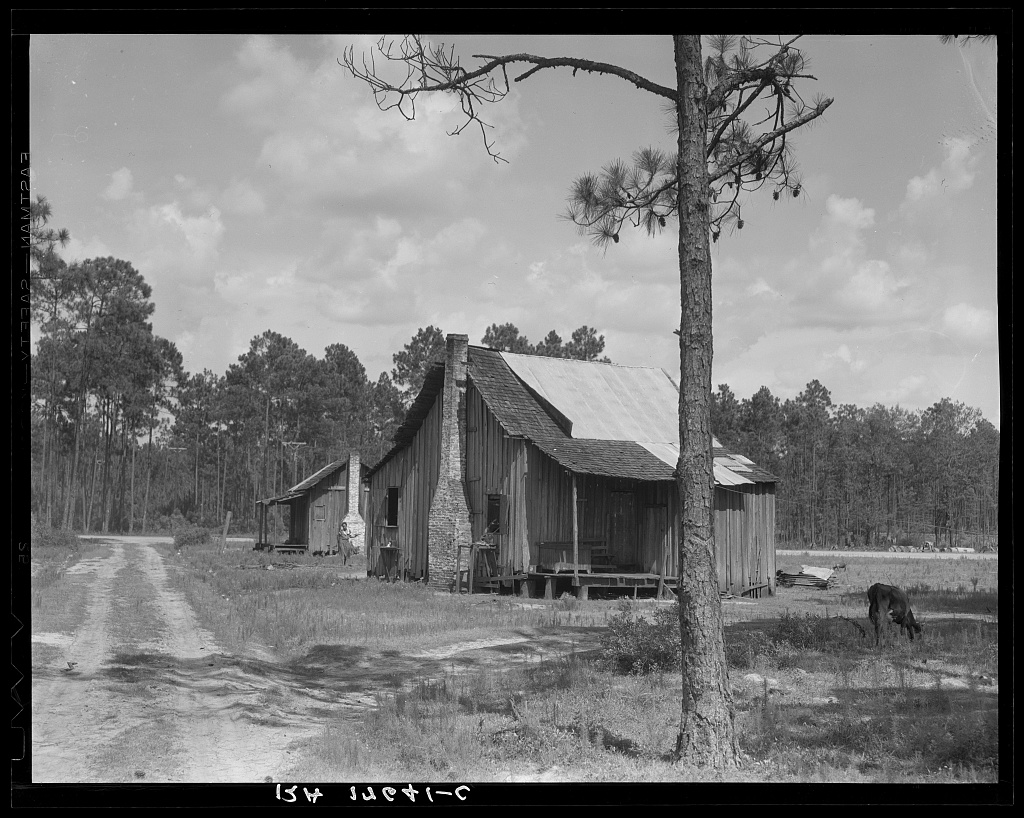
Rent to live in a shack, was automatically deducted from their pay before they ever saw it. These shanties were hastily built on raised wooden blocks with wide gaps between the floorboards, leaving the families exposed to insects, dirt, and the elements.
The floors were rough, unpolished pine planks notorious for inflicting deep, painful wood splinters into your feet. A stark contrast to the smooth, processed lumber the mills were shipping out by the hundreds of thousands of feet.
Furthermore, because these shanties were hastily built, the wooden shingles would warp, rot, or split under the brutal Southern sun and heavy rains, causing massive leaks inside the home. To quickly patch a failing roof without tearing the whole thing down, the camp bosses or the families themselves would nail large sheets of corrugated metal (tin) directly over the leaking wood.
I will be sharing a memory about visiting family that lived in homes like this in a later post.
The Beginning of a New Era
By the mid-1930s, Lamont Rowlands and L.O. Crosby had clear-cut the native longleaf pines to exhaustion, leaving millions of acres barren. The turpentine camps were packed up onto railcars and vanished. Their empire was collapsing.
In a desperate pivot, L.O. Crosby imported thousands of Asian tung trees and planted massive orchards across the newly cleared, devastated forest lands. Almost overnight, Picayune, Mississippi became “Tung Oil Capital of the World” by processing a highly prized, waterproof wood varnish from the pressed nuts. My great-grandparents missed this agricultural boom. By the time the tung orchards were dominating the county, they were in their 70s.
The End of That Era
The Tung Oil Era ruled Pearl River County for three decades, until Hurricane Camille unleashed her fury. That sudden end happened in 1969. In a “life is funny” twist of generational timing, 1969 is the year I was born, 2 months after Hurricane Camille. History doesn’t just stop; it hands off the baton.
The turpentine camps were nomadic ghost towns built on temporary railroad tracks. They left no grand plantation houses behind, only cleared earth, old resin cups, and a heavy silence. Because the camps were built to be dismantled and moved once the trees were bled dry, the history vanished with them as well. It was a place built on land owned by millionaires, and run on the backs of Black labor.
The Matriarch’s Horizon
In the next installment of Where History Takes Me, we leave the turpentine camps behind and step into the world of my grandma. I never knew she had siblings and I never knew the depths of what she survived. She kept her silence, but the archives have finally given her a voice.
Citations:
(1915) Convicts Leased to Harvest Timber. United States of America Florida, 1915. [Place of Publication Not Identified: Publisher Not Identified] [Photograph] Retrieved from the Library of Congress, https://www.loc.gov/item/2021669926/.
Keystone View Company. (ca. 1926) A turpentine farm–Dippers and Chippers at work, Savannah, Ga., U.S.A. Georgia Savannah, ca. 1926. Meadville, Pa. ; New York, N.Y. ; Chicago, Ill. ; London, England: Keystone View Company, Manufacturers and Publishers, Dec 11. [Photograph] Retrieved from the Library of Congress, https://www.loc.gov/item/2014649896/.
Lange, D., photographer. (1936) Turpentine worker’s family near Cordele, Alabama. Father’s wages one dollar a day. This is the standard of living the turpentine trees support. United States Cordele Alabama, 1936. July. [Photograph] Retrieved from the Library of Congress, https://www.loc.gov/item/2017763012/.
Lange, D., photographer. (1937) Turpentine worker. DuPont, Georgia. Clinch County United States Georgia Dupont, 1937. July. [Photograph] Retrieved from the Library of Congress, https://www.loc.gov/item/2017770417/.
Lange, D., photographer. (1937) Turpentine worker’s cabins. Valdosta, Georgia. Valdosta Lowndes County Georgia United States, 1937. July. [Photograph] Retrieved from the Library of Congress, https://www.loc.gov/item/2017770325/.

